Whatsapp:(+86) 15712787118
Need help or have a question?
Contact us at: jimmy.wang@lhacp.com
201 Zhanbei street, Zhuliu street, Weifang City, Shandong Province, China
Whatsapp:(+86) 15712787118
Need help or have a question?
Contact us at: jimmy.wang@lhacp.com
201 Zhanbei street, Zhuliu street, Weifang City, Shandong Province, China

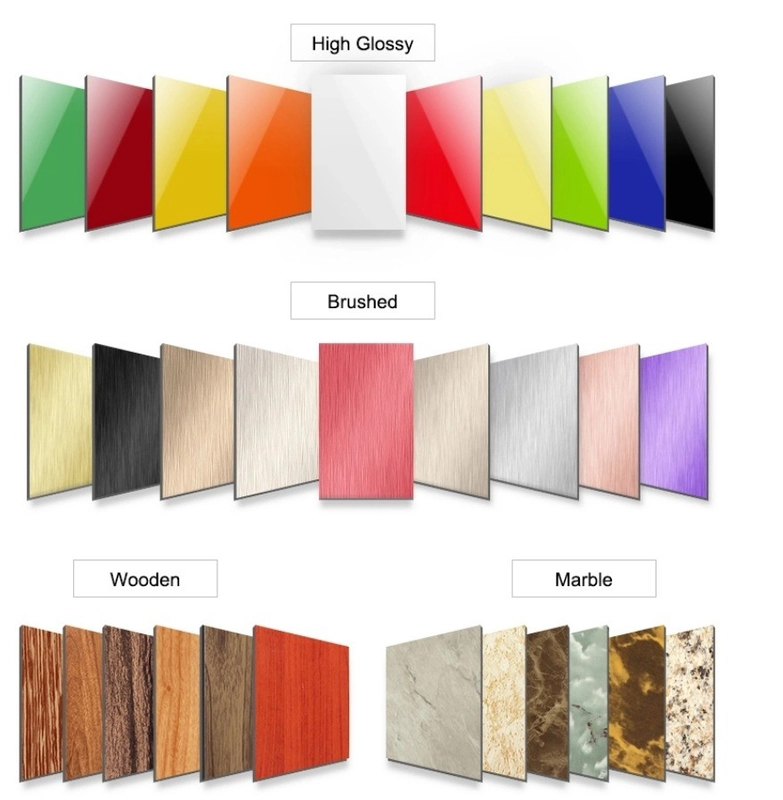
Aluminum Composite Panel (ACP) is a new decorative material made by bonding aluminum sheets with a polyethylene plastic core through hot pressing. It is widely used for building exterior walls, curtain walls, interior decoration, and signboards.
The installation method depends mainly on the application scenario (exterior wall / interior wall / ceiling / signboard) and the fixing technique.
Applications: Exterior walls, curtain walls, large façade installations
Advantages: Ventilated, moisture-resistant, easy maintenance, good flatness, durable
Installation Process:
Applications: Interior wall decoration, ceilings, column wrapping
Advantages: Low cost, simple process
Disadvantages: Not weather-resistant, unsuitable for outdoor use
Installation Process:
Applications: Signboards, display boards, interior decoration, ceilings
Advantages: Easy installation, low cost
Disadvantages: Slightly lower flatness, visible screw heads may affect appearance
Installation Process:
Applications: Special shapes or areas requiring extra strength
Method:
Use mechanical fastening (dry-hanging) for key load-bearing points, and structural adhesive elsewhere for stability and sealing.
| Application Area | Installation Method | Fixing Type | Adhesive Type | Features |
|---|---|---|---|---|
| Exterior wall / façade | Dry-hanging | Keel + clips | Silicone sealant | Safe, durable |
| Interior wall | Adhesive | Direct bonding | Universal / structural glue | Simple, economical |
| Ceiling | Screw fixing | Wooden / steel frame | None | Easy installation |
| Signboard | Screw / rivet fixing | Metal frame | Optional | Low cost, replaceable |
